One Region, One Voice: Asia-Pacific Officials Make the Case for Financing the Early Years
Advocacy : ECD Governance, Policy, and Financing
JAKARTA — Across Asia-Pacific, early childhood development (ECD) is recognised as the foundation of learning, health, protection, and resilience, yet in many countries it still has no budget line of its own.
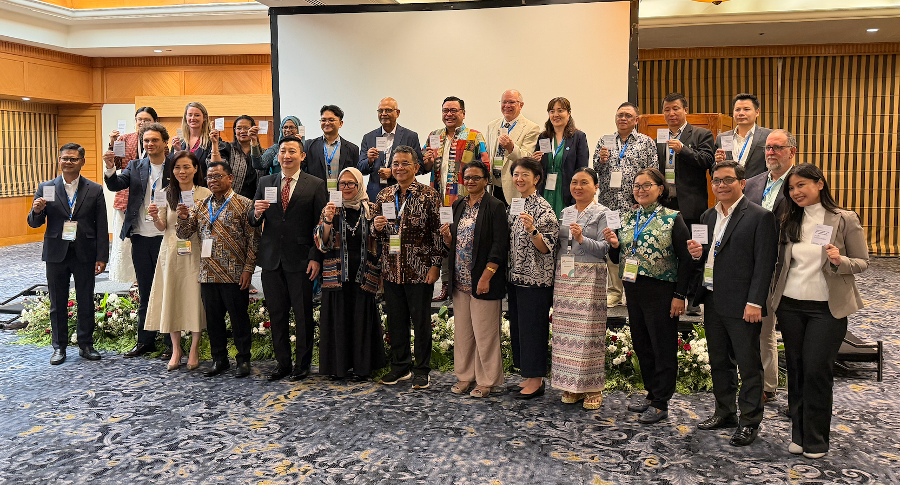
On 21 October 2026, ARNEC brought the people who shape those budgets into one room. Chaired by ARNEC during the 2026 Asia-Pacific Regional Learning Forum on ECD, the ECD Financing Dialogue gathered 11 senior government officials from 10 countries, alongside SEAMEO CECCEP, the SEAMEO Secretariat, Tanoto Foundation, UNESCO, UNICEF and Theirworld's Act For Early Years campaign.
Their starting point was firm: ECD is a public good and a public responsibility, and governments must lead on financing it.
Officials agreed that ECD should be a protected line in public budgets, from national to local, and that funding must pay for quality, not just more places. Climate finance, carbon credits and workplace childcare can bring in new money, they noted, but must reinforce the public system rather than replace it.
The Dialogue then turned to collective action. Officials agreed on three regional priorities: know what we spend, through ECD budget tagging and tracking; take one regional voice to finance ministries; and build a coalition to open climate finance to ECD.
Delegations also shared the directions they are exploring at home, from dedicated ECD budget lines and a larger share of education budgets to stronger allocations for local governments. Each will take shape through its country's own national processes.
These priorities echo the Act For Early Years campaign, which calls on governments to invest 10% of education funding in pre-primary education, to track early years investment, and to coordinate services across sectors under senior leadership.
The road now leads to London, where the Global Early Years Summit will convene in June 2027. ARNEC will synthesise the countries' reflections into a unified Asia-Pacific position, so that the region arrives with evidence, commitments, and one voice. As the Dialogue's outcome statement puts it, financing the early years is not a cost to contain; it is the first and best investment a government can make.