When Mayors Lead, Children Gain: Makassar and Surabaya Show How Cities Can Finance the Early Years
Advocacy : ECD Governance, Policy, and Financing
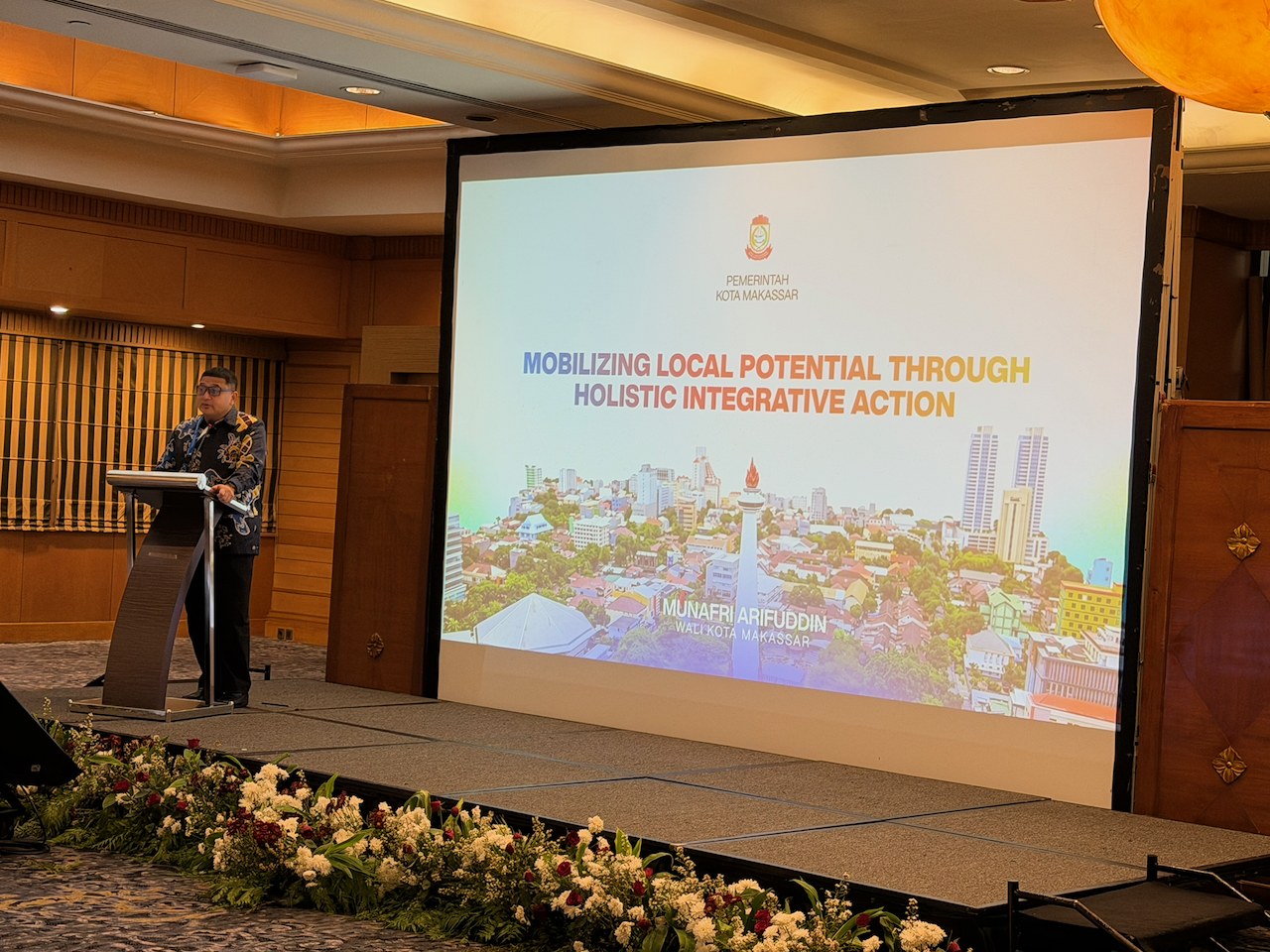
JAKARTA — If the 2026 Asia-Pacific Regional Learning Forum on Early Childhood Development carried one message, it was this: ECD financing becomes real when local leaders own it. Few made that case more convincingly than Mayor Munafri Arifuddin of Makassar and Mayor Eri Cahyadi of Surabaya.
Beyond an interview with ARNEC, both Mayors were invited to speak at the Forum's Parallel Session on Local Leadership and Community Engagement in ECD Financing. At the close of the session, they signed a Memorandum of Understanding with Indonesia's National Coalition for Holistic Integrative ECD to advance ECD financing, turning a conversation into a commitment.
"This is not only about learning," Mayor Arifuddin said. "This is an investment for the next generation." Makassar treats early childhood as an economic instrument, not a welfare add-on, grounding its case in the evidence that 90 percent of brain development occurs before age six. Mayoral regulations on holistic-integrative ECD and one year of compulsory pre-primary education anchor that commitment. The city allocates ECD funds to every district, coordinates budgets across agencies to avoid overlap, and offers extra incentives to teachers serving its islands. Public ECD centres, now in 7 of 15 districts compared with 3 in 2024, double as hubs for parenting and inclusion.

Surabaya shows what evidence and partnership can achieve at scale. Its SIBUNDA "One Data" platform tracks children, teachers and centres across sectors. "Government should know how many children will enter early childhood education," Mayor Cahyadi said, "because that determines the budget we prepare." Blending the national budget (APBN), the city budget (APBD) and corporate social responsibility (CSR) funds, the city has grown ECD financing from IDR 162.4 billion in 2025 to IDR 464.3 billion in 2026, with IDR 624.4 billion planned for 2027. CSR alone rose from 17 percent of the total to more than half, a sign of how businesses, universities and banks have rallied behind the early years. Enrolment rose from 86 to nearly 99 percent between 2024 and 2025, while ECD teachers holding bachelor's degrees climbed from 63 to 90.5 percent, backed by scholarships.
Both Mayors stressed that budgets alone are not enough. Clear systems, health and nutrition, parenting support and rigorous monitoring and evaluation make sure every rupiah reaches children.
"For us, the future of our children determines the fate of our city," Mayor Cahyadi said. It is a lesson local governments across Asia-Pacific can put to work now.